
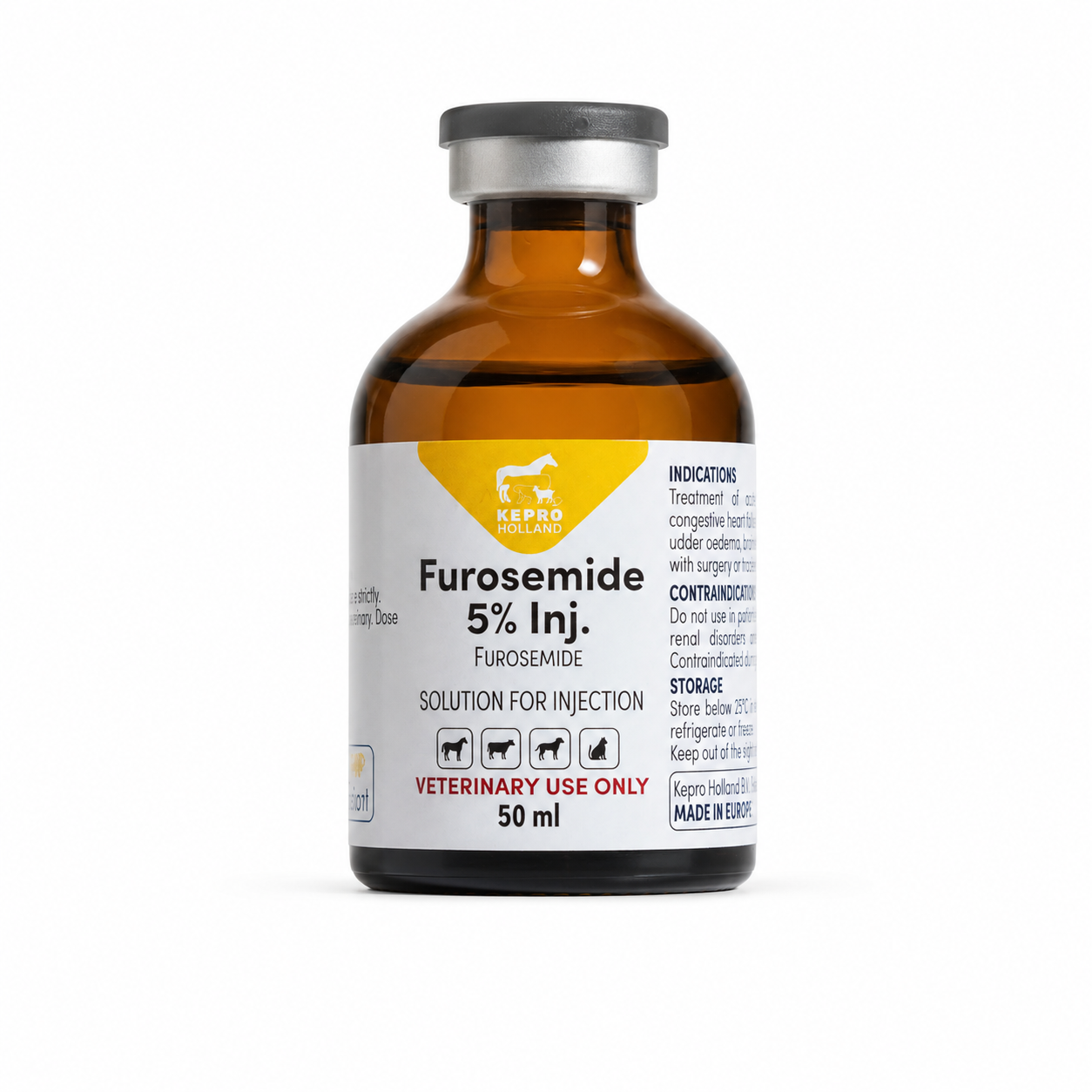
Furosemide 5% Inj.
Furosemide 5% Inj. is a Kepro veterinary product developed to provide a clearly defined therapeutic or nutritional role. Its formulation is based on furosemide 5% in a veterinary injectable solution. These components give the product a practical place in veterinary programs aimed at management of clinically significant fluid retention and edema, including situations associated with congestive heart failure, pulmonary edema or udder edema where a veterinarian determines diuresis is appropriate. The dosage form is designed for professional animal use and should be incorporated into a treatment or support plan only in accordance with the approved label and local registration.
From a functional perspective, Furosemide is a loop diuretic that reduces sodium and chloride reabsorption in the kidney, increasing urinary excretion of water and electrolytes and thereby helping decrease excess fluid volume. This profile explains why the product may be useful when a veterinarian wants to address a specific physiological or clinical need rather than treat signs without identifying their cause. According to available product information, target species include cattle, horses, dogs and cats as commonly indicated for veterinary furosemide products. Final case selection still depends on diagnosis, age, body weight, production stage and the presence of concurrent disease or medicines that could influence response or safety.
A key strength of Furosemide 5% Inj. is the combination of a recognizable active profile with a veterinary dosage form suited to routine clinic or farm use. When selected for the right case, it can form part of a broader program intended to support or treat management of clinically significant fluid retention and edema, including situations associated with congestive heart failure, pulmonary edema or udder edema where a veterinarian determines diuresis is appropriate. It should not be presented as a universal answer to every animal showing the same clinical sign, because similar signs may arise from very different infectious, nutritional, metabolic or management-related causes.
Because loop diuresis can be powerful, treatment requires attention to hydration, renal function and electrolyte balance, especially sodium and potassium during repeated administration. The aim is to remove clinically excessive fluid without causing dehydration, hypotension or metabolic disturbance. The underlying cause of fluid retention—such as cardiac, pulmonary or renal disease—should also be investigated because a diuretic reduces fluid burden but does not necessarily correct the primary disease.
This copy is written for a veterinary product page, so it focuses on product identity, clinical or nutritional role, and practical positioning rather than reproducing a dosing leaflet. The product should always be used according to the locally approved label and package leaflet because authorized species, dosage schedules, withdrawal periods, contraindications and warnings may differ between markets. Appropriate veterinary use also depends on diagnosis, body weight, age, kidney and liver status, pregnancy or lactation, concurrent medicines and, for antimicrobials, the likely or confirmed susceptibility of the causative organism. Website information should therefore complement, not replace, professional veterinary advice and the manufacturer’s approved instructions.
For a website product page, Furosemide 5% Inj. can be positioned as a specialized Kepro option with a defined formulation and a clear practical purpose. A complete page should ideally show the original pack, dosage form, principal active ingredients, registered target species and the general therapeutic or nutritional role. Detailed dosage, withdrawal and contraindication information should remain linked to the official leaflet or be provided by a veterinarian. This approach gives customers useful, professional information while keeping regulatory and clinical decisions where they belong: with the approved product information and qualified veterinary guidance.